I Wrote a Book. Here's What It Actually Did for My Income (and What It Didn't)
Let's start with a myth, because it's what gets most therapists to think about sitting down to write in the first place: you think it's going to be a windfall. Six figures, a publisher's advance, a passive income stream that pays your mortgage while you sleep.
It isn't that. For almost every clinician who self-publishes, it's not that. And when that gap shows up, it's what makes a lot of therapist-authors feel like the whole project was a waste, when really it just did a different job than the one they signed up for.
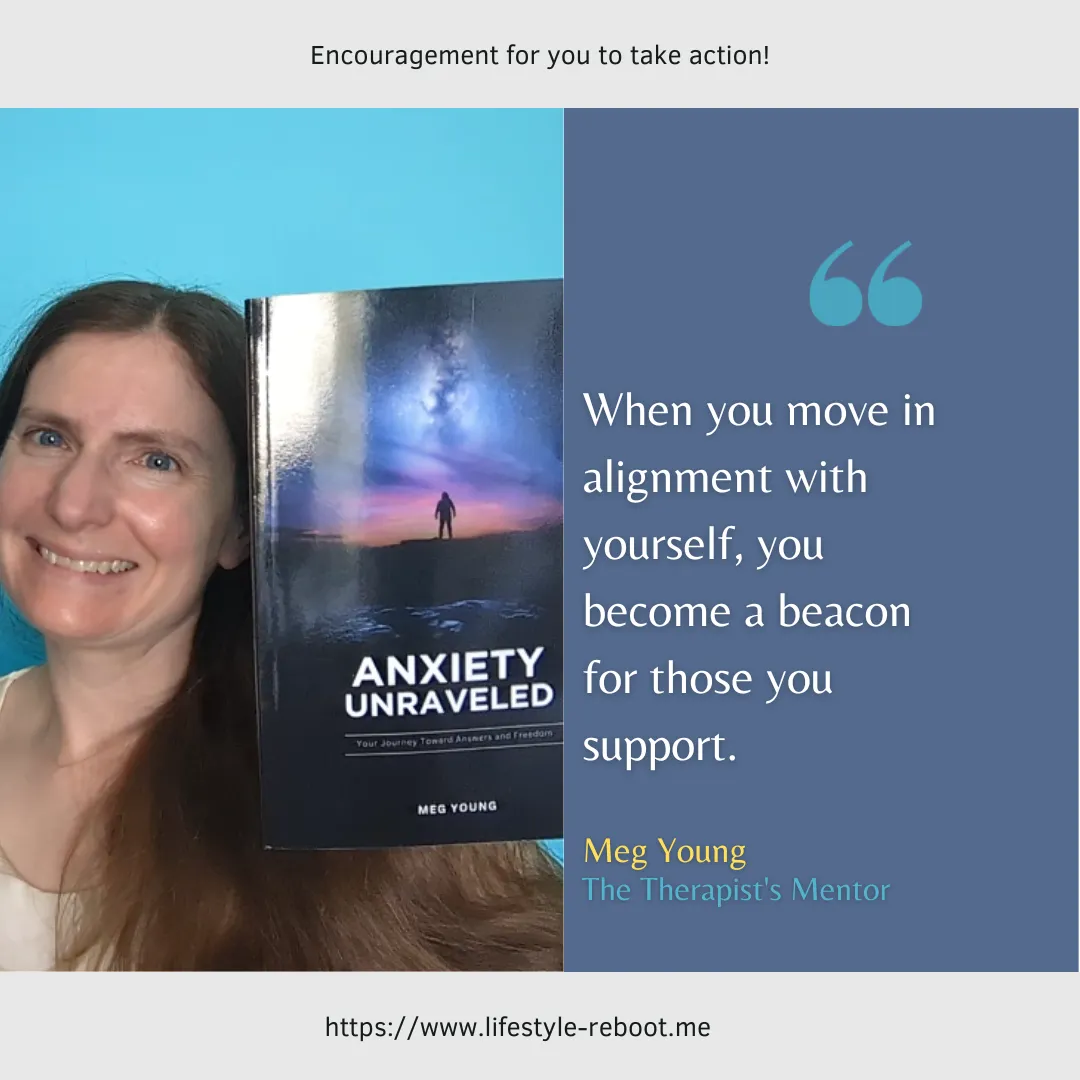
Here's what writing Anxiety Unraveled: Your Journey Toward Answers and Freedom actually did and didn't do for me.
What it didn't do: replace session income. Most self-published books sell in the hundreds to low thousands of copies over their lifetime, not the tens of thousands people picture. If you're doing this math as "book income vs. session income," the comparison doesn't hold up, and it's the wrong comparison to make. The book's actual value shows up on a much longer timeline.
What it did: change what people believed about me before we ever spoke. A book is a credibility shortcut that no amount of Instagram content builds as fast. A potential client — or a referring clinician — who finds the book before they find you already believes that this person has thought about this deeply enough to write it down. That belief is doing work before a consultation call. It changes the tenor of that first conversation, too as people arrive less guarded, because they feel like they already know something about how you think.
What it did: became a referral tool I didn't have to think about. Colleagues started mentioning it to other people. It became a business card that does more convincing than a business card ever could, and it kept doing that convincing months and years after publication with zero ongoing effort from me. I didn't have to be in the room for the book to make the case for working with me; it made the case on its own, in waiting rooms and consult calls I wasn't part of.
What it actually cost: Time, mostly. Eighteen months give or take of writing around a full caseload. In addition, nobody tells you that the marketing after publication is a bigger job than the writing was. The writing has a finish line. The marketing doesn't; it's an ongoing, low-grade task that never fully turns off, and clinicians who expect the work to end at publication are usually the ones who feel let down by the whole experience.
What I'd tell someone starting today: Write the book you keep almost writing in your head during sessions, not the book you think will sell best. Specificity is what made Anxiety Unraveled work; it wasn't a book about anxiety in general, it was a book about the exact kind of anxiety I kept seeing and kept not finding good language for elsewhere including why tools work and don't work and how to set yourself up for success working through anxiety.
What surprised me most: I expected the writing to be the hard part and the publishing to be a formality. It was almost exactly backwards. The writing, once I had a real outline, moved faster than I expected because I was drawing on material I'd already said out loud hundreds of times. What I didn't expect was how much decision-making publishing itself would require including the cover design, formatting, categorization, pricing, and where to list it. Nobody warns you that self-publishing is a small business you're starting inside your bigger one.
The part that's easy to skip and shouldn't be: Editing. Not proofreading ; developmental editing, the kind where someone tells you a chapter doesn't work structurally before a reader ever has the chance to feel that themselves. It's tempting to skip this step to save money or time, and it's the single most common reason self-published clinician books read as unpolished. Your clinical judgment doesn't automatically transfer to editorial judgment about your own writing, and it shouldn't have to.
Choosing what to write about: The clinicians who struggle most with this step are the ones trying to write the book they think the market wants instead of the book they're already qualified to write without additional research. You don't need a novel topic; you need a specific enough angle on a familiar one. There is no shortage of anxiety books. There was, when I looked, a shortage of anxiety books written specifically for people feel like they've done everything and nothing is working. That gap, not the topic itself, is what made the book distinct.
Self-publish or pursue a traditional deal? I chose self-publishing deliberately, and for most clinicians I'd suggest the same path. A traditional deal offers distribution and an advance, but it also means a longer timeline, less control over the final product, and often a smaller royalty percentage per copy than self-publishing pays. For a niche clinical audience; which is what most therapist-authors are actually writing for, even if the book is framed for a general reader; self-publishing usually gets the book into the hands of the people who matter (referring clinicians, ideal clients, your own professional network) faster and with more control over how it's positioned.
The long tail is the actual return: The mistake I see other clinicians make is judging a book's success in the first three months, the way you might judge a course launch or a group's first cohort. A book doesn't work on that timeline. Its value compounds over years, not weeks. A colleague may find it in year three and start referring; a podcast host may find it in year four and books you as a guest; a client's family member may read it in year five and call your office. If you're only counting what happens at launch, you're closing the book on the story before its actual plot even starts.
Should you write one? If you're evaluating this purely as a revenue line, the math rarely justifies the time. If you're evaluating it as an authority-building asset that makes every other income stream you have easier, such as filling the group faster, the consulting work feeling credible, or the speaking invitations starting to arriving unprompted. It's one of the best investments a clinician can make in themselves. The clinicians who regret writing a book are almost always the ones who went in expecting it to function like a product launch. The ones who don't regret it went in expecting it to function like a foundation; something built once that quietly supports everything built on top of it afterward.
I didn't write Anxiety Unraveled because I thought it would make me rich. I wrote it because I was saying the same things in session and knew I needed to get what I was saying in front of more people. Everything else it did for my practice was the bonus, not the plan.
FAQ
How much money does a self-published book make for a therapist?
Most self-published nonfiction books by clinicians sell in the hundreds to low thousands of copies over their lifetime; royalty income alone is rarely a meaningful replacement for clinical session income.
Is writing a book worth it for a therapist's practice?
The value is typically indirect rather than direct. A published book builds authority and trust before a potential client or referral source speaks with the clinician, which can improve conversion for other income streams like groups, courses, or consulting.
How long does it take to write and publish a self-help book?
Timelines vary, but it took me about a year and a half from first draft to publication when writing around an active caseload.
